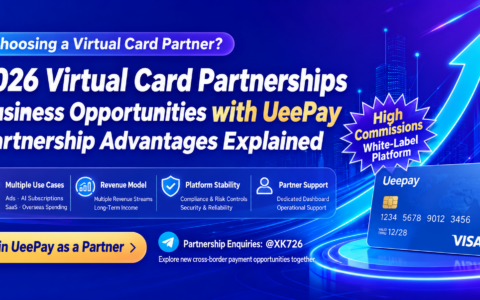
Virtual cards are used for eligible international purchases, advertising, software subscriptions, and business expenses. Some card platforms offer referral or distribution partnerships for service providers that work with these customers.
Cross-border service providers, advertising agencies, content creators, website operators, and developers may be able to introduce customers to a platform through its partner program.
This guide explains how virtual card partnerships work, how to get started, and what to check when comparing providers.
What Is a Virtual Card Distribution Partnership?
A distribution partnership involves promoting a platform’s virtual card products under its partner program. Compensation may include referral commissions, revenue sharing, or other benefits defined in the agreement.
A partner may use the provider’s existing infrastructure rather than building every component independently. Depending on the agreement, the provider may handle:
- The underlying card issuance infrastructure
- Relationships with card issuers and banking partners
- Payment processing and settlement
- Platform risk controls
- Product updates and technical maintenance
Partners can focus on marketing, customer support, and business development. The agreement should still define each party’s responsibilities, permissions, and any compliance obligations.
Why Consider a Virtual Card Partnership?
1. Serve Relevant Customer Needs
Possible use cases, subject to issuer rules and merchant acceptance, include:
- Overseas advertising (Facebook Ads, Google Ads, TikTok Ads, etc.)
- AI tool subscriptions (ChatGPT, Claude, Cursor, Gemini, etc.)
- Business procurement
- Cloud hosting and SaaS subscriptions
- Cross-border e-commerce procurement
- International online payments
Identify which of these needs your customers actually have before choosing a provider.
2. Use Existing Infrastructure
Building a payment product may involve:
- Banking partnerships
- Card issuance systems
- Risk management teams
- Technical development
- Compliance processes
A partnership can reduce the development work needed to offer access to an existing product. Compare setup fees, ongoing charges, support needs, and contractual responsibilities before committing.
3. Different Compensation Models
Partner compensation varies by platform. Models may include:
- Qualified referral commissions
- Card issuance commissions
- Funding service commissions
- Transaction-based revenue sharing
- Business customer partnerships
- Team referral incentives, where permitted
Review qualification criteria, payout timing, deductions, refunds, and termination terms before joining.
Who Might Consider a Partnership?
Potential partners include:
✅ Cross-border e-commerce service provider
✅ Advertising team
✅ Independent website building company
✅ Website operator
✅ AI tool content creator
✅ Software development company
✅ Corporate service agency
✅ Payment service provider
An existing customer base or a consistent publishing channel can help you reach relevant users.
Does the Platform Offer an API?
An API can help business customers connect card services to their existing systems.
Depending on the API and permissions, available functions may include:
- Creating cards
- Funding eligible cards
- Checking balances
- Retrieving transaction records
- Freezing or closing cards
- Receiving transaction webhooks
- Integrating with ERP, CRM, and accounting systems
For integration projects, check the API documentation, authentication, permissions, test environment, webhook behavior, and technical support.
Are White-Label Partnerships Available?
Some providers offer white-label arrangements that allow approved partners to present services under their own brand.
Depending on the agreement, features may include:
- Custom branding
- A partner dashboard
- API access
- Business access controls
- Team management, subject to provider policies
Confirm which party is the issuer, who serves customers, and which branding and disclosures are required before offering the service.
How to Start a Partnership
A practical process is:
Step 1: Apply to the Partner Program
Review the products, partner rules, fees, and support arrangements, then submit an application if the program fits your business.
Step 2: Understand the Product
Key points to understand:
- Application and card issuance process
- Supported purchase categories and merchants
- API functions
- FAQ
- Account and transaction restrictions
Understanding eligibility and limitations helps you give customers accurate guidance.
Step 3: Choose Marketing Channels
Channels to consider include:
- Your business website
- Search-focused educational content
- Zhihu articles
- A WeChat official account
- Xiaohongshu
- TikTok
- Telegram community
- YouTube
Publish useful, accurate content consistently and measure whether it attracts relevant visitors.
Step 4: Support Your Customers
Provide application guidance, clear product information, and support within your agreed responsibilities. Explain how customers can reach the provider for issues you cannot resolve.
How to Evaluate a Provider
Ask these questions:
- What are the provider’s operating history and service commitments?
- Does it support the business customers you serve?
- Is an API available for the required functions?
- Is there a partner dashboard?
- What technical support is included?
- How are account and transaction risks handled?
- How are product changes communicated?
- How are customer complaints and payment disputes handled?
Read the partner agreement, fee schedule, and service terms. Confirm the issuer, supported regions, customer eligibility, and each party’s responsibilities.
Frequently Asked Questions (FAQ)
Do Partners Need Development Skills?
Referral-only work may not require coding. API integration requires suitable development skills, testing, and ongoing maintenance.
Must a Partner Have a Registered Business?
Requirements depend on the program, your location, and the services you provide. Confirm eligibility and any registration obligations before applying.
Can Partners Manage a Team?
Some programs provide team accounts or business partner roles. Permissions and compensation are governed by the provider’s agreement.
How Can I Reach Relevant Customers?
Use educational content, relevant case studies, a clear website, and well-managed communities. Track qualified referrals and customer outcomes to see which channels work.
What Support Should a Platform Provide?
Capabilities to check include:
- Clearly documented card products and service commitments
- Business API access, if required
- Documented supported uses and restrictions
- Professional technical support
- A documented partner program
- Product updates and change notices
These capabilities can help partners provide accurate information and manage support consistently.
A virtual card partnership can help you connect eligible businesses and users with a provider’s payment products.
Evaluate the program against your customer needs, acquisition costs, support capacity, and contractual obligations before investing in it.
Choose a provider with clear product terms, appropriate technical support, and transparent partner policies. Confirm the features and responsibilities in writing.
本文由 VCCMap 虚拟卡指南整理,转载请注明出处:https://vccmap.com/en/%e8%99%9a%e6%8b%9f%e5%8d%a1%e4%bb%a3%e7%90%86%e5%88%86%e9%94%80%e6%80%8e%e4%b9%88%e5%81%9a%ef%bc%9f2026-%e6%9c%80%e6%96%b0%e4%bb%a3%e7%90%86%e5%90%88%e4%bd%9c%e6%a8%a1%e5%bc%8f%e8%a7%a3%e6%9e%90-en/