Your account has money in it, but the virtual card you use for ChatGPT, Claude, or another subscription is short on funds. The renewal fails, and you have to find the right card and top it up before trying again.
That’s manageable with two or three cards. With ten or more, checking individual balances and moving money around takes time. A shared wallet can simplify that work if your card provider offers one.
How does a shared wallet work?
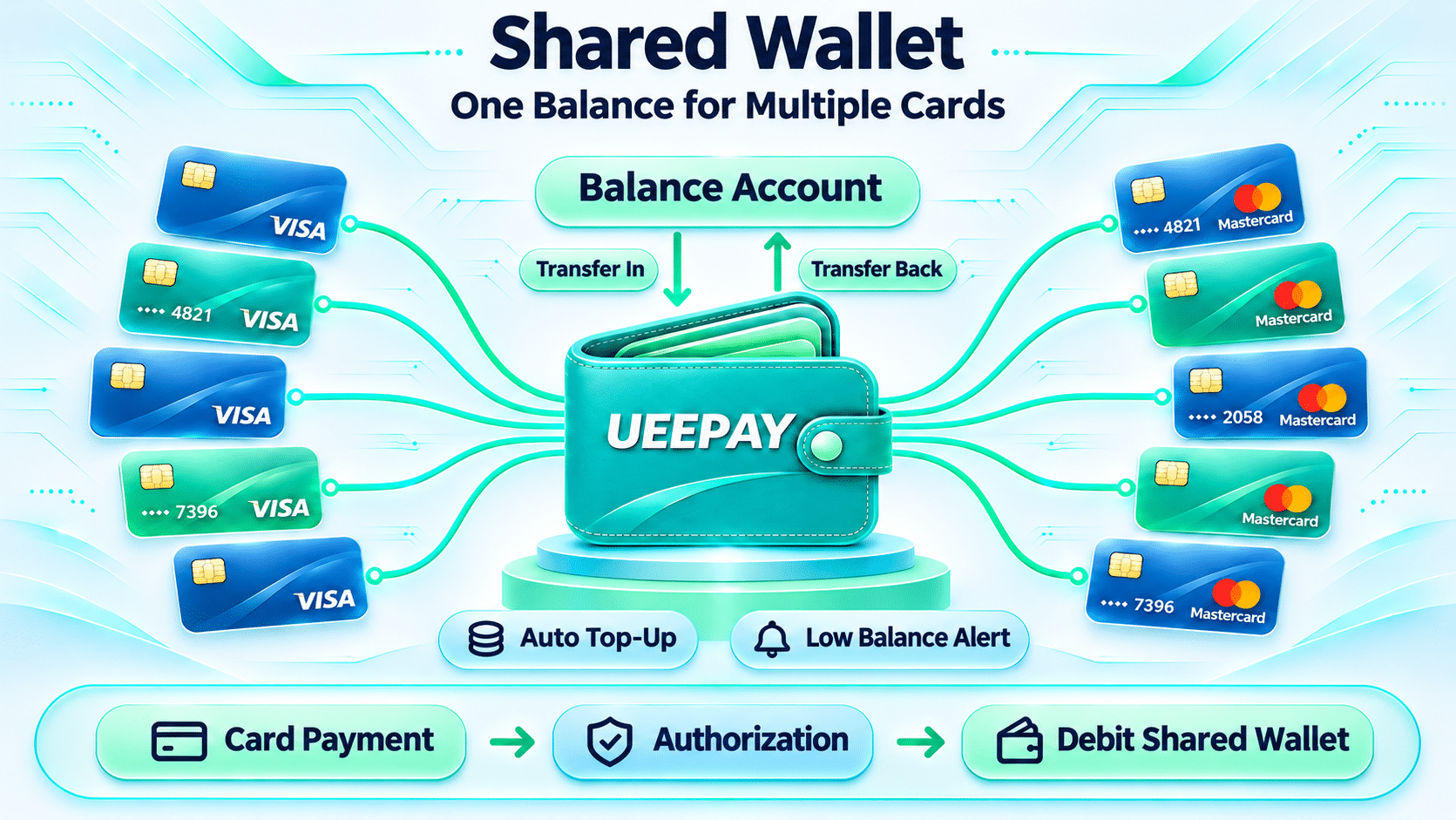
Multiple virtual cards draw from a single wallet balance. You add funds to the wallet, and when a linked card makes an approved purchase, the charge comes out of that balance.
Say one card has $100 sitting unused while another is $10 short for a subscription renewal. With a shared wallet, you can skip the transfer between cards as long as the wallet covers the charge and the amount is within the card’s spending limit. The transaction still has to pass the provider’s and merchant’s payment checks.
What are the benefits?
- Fewer top-ups. Add funds to one wallet for all the cards linked to it.
- Less money sitting idle. Monthly and annual subscriptions can draw from the same balance as their renewal dates come up.
- Easier expense tracking. Use separate cards for AI subscriptions, software purchases, and project expenses while keeping the funds together. If your provider offers per-card statements, you can see which card was charged for each purchase.
Can a shared wallet help payments go through?
It can reduce declines caused by insufficient funds on individual cards. A merchant can still decline a payment even when the wallet has enough money. The decision can depend on the card’s bank identification number (BIN), your billing details, and the merchant’s payment rules.
An unexpected charge on one card also reduces the balance available to the others. If your provider lets you set per-card spending limits, base each limit on the expected subscription cost and allow some room for taxes or exchange-rate changes. That can limit how much one unexpected charge draws from the wallet.
Who benefits most?
If you use one card for the occasional subscription, a shared wallet may make little difference. If you manage a dozen cards for AI subscriptions, SaaS tools, or cross-border business expenses, you’ll have fewer balances to monitor and fewer transfers to make.
Follow VCCMAP for more guides on virtual cards, shared wallets, and cross-border payments.
Prepared by VCCMap. Please credit the source when republishing:https://vccmap.com/en/10-virtual-cards-without-recharging-one-by-one-lets-talk-about-the-use-of-shared-cards/