What is a virtual credit card? How does it differ from a physical bank card, what can it be used for, and is it safe? This guide explains how virtual cards work, their advantages, common use cases, and what to consider when choosing one.
What is a virtual credit card?
As international services such as ChatGPT, Claude, Google One, Facebook Ads, and TikTok Ads become more widely used, virtual cards have become an important tool for cross-border payments.
People who are new to virtual credit cards often ask:
- Are virtual credit cards real?
- How can I pay without a physical card?
- Can I use one like a regular bank card?
- Is it safe?
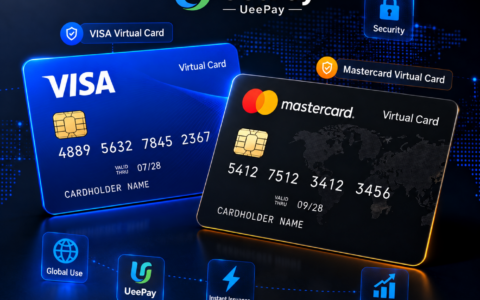
A virtual credit card is not a fake card. It is a digital card designed for online payments, with a card number, expiry date, and security code (CVV). It can be used at online merchants that accept the relevant card network, such as Visa or Mastercard, subject to the issuer’s and merchant’s requirements.
In simple terms, it provides card payment details without a physical card and is intended for online purchases and cross-border payments.
How does a virtual credit card work?
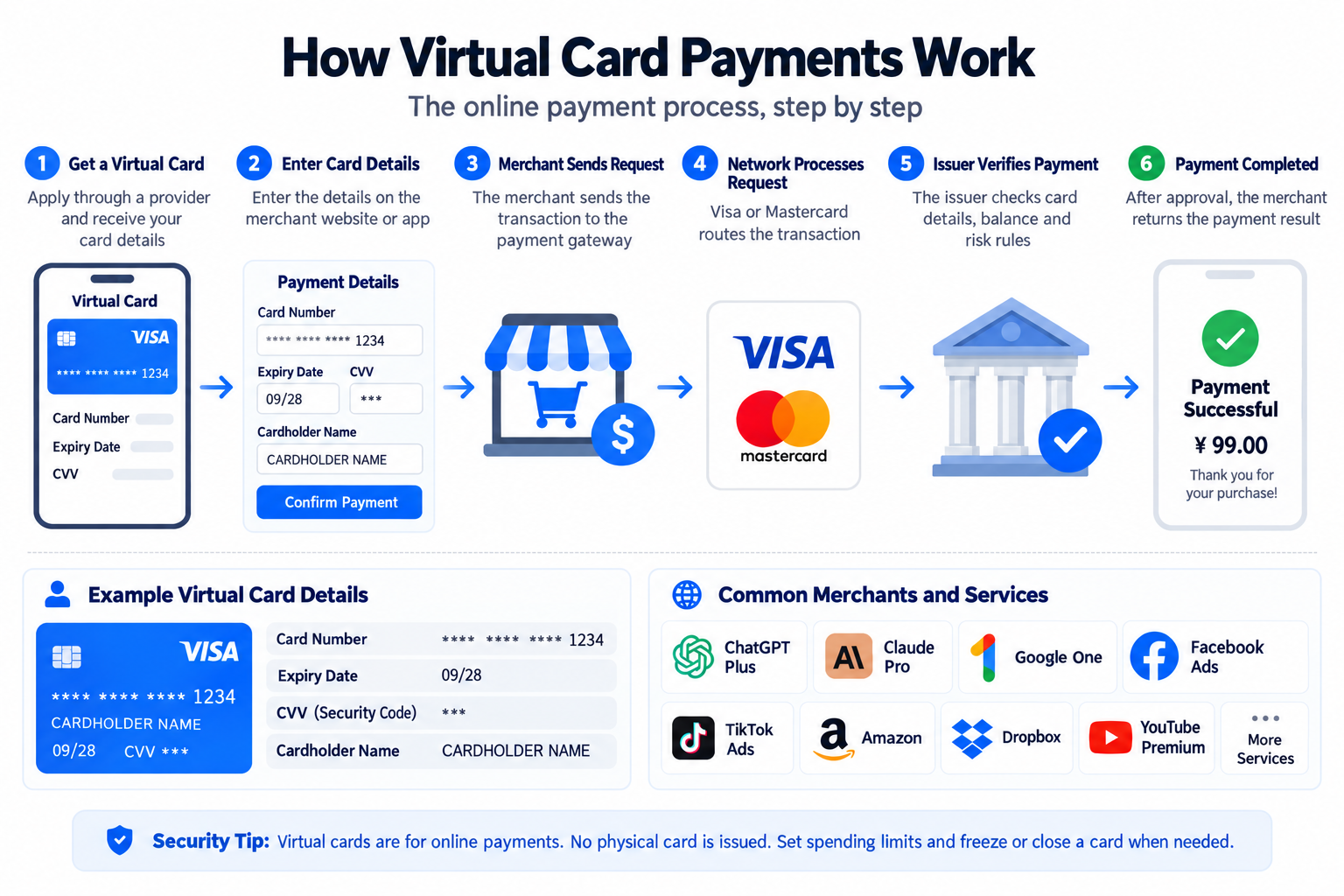
Although there is no plastic card, it provides the details required for a card payment:
- Card number
- Cardholder name
- Expiry date
- Security code (CVV/CVC)
Enter these details on a website or in an app. The payment is processed through a card network such as Visa or Mastercard.
The process is similar to paying online with a physical credit card, but you do not need to wait for a physical card to arrive or carry one with you.
What are the advantages of virtual credit cards?
1. Faster card issuance
Applying for a traditional bank card can involve review, issuance, and mailing, which may take days or weeks.
Many virtual card providers accept online applications. After approval, some allow you to obtain card details and begin making online payments within minutes.
2. Support for cross-border payments
Many international platforms accept Visa and Mastercard. Potential uses include:
- AI tool subscriptions
- International cloud services
- Advertising payments
- Software purchases
- Online education
- International e-commerce purchases
Supported countries, currencies, and merchant types vary by provider. Actual acceptance depends on the issuer’s rules and the merchant’s requirements.
3. Easier spending management
Many providers let you create separate cards for software subscriptions, advertising expenses, business purchases, and employee travel.
This helps with budgeting and can reduce the effect on other spending if one card’s details are exposed.
4. Additional online payment controls
If card details are exposed in a data breach, you may be able to freeze or cancel the affected virtual card instead of replacing all your cards.
Some issuers offer controls such as:
- Per-transaction limits
- Daily limits
- Total spending limits
- Validity periods
- Restrictions on intended use
These features can help reduce online payment risks.
What can virtual credit cards be used for?
As digital services expand, common use cases include the following.
AI software subscriptions
Examples include ChatGPT Plus, Claude Pro, Midjourney, Perplexity Pro, and Google AI services.
Acceptance depends not only on whether the card is virtual but also on factors such as its issuing region, the merchant’s risk checks, and the billing address.
Advertising
Cross-border advertising teams use separate cards to manage budgets for accounts on platforms such as Facebook Ads, Google Ads, TikTok Ads, Reddit Ads, and Taboola.
Separate cards can make it easier to track advertising expenses by project.
Business purchases
Businesses can separate departmental expenses for cloud servers, office software, SaaS services, domain names, CDN services, and AI tools.
This can help with reconciliation and budget control.
International shopping
International retailers such as Amazon, eBay, and Walmart accept card payments. Check each website’s regional restrictions and payment rules before using a virtual card.
Are virtual credit cards safe?
Security is a common concern for first-time users.
Legitimate virtual cards typically use the same payment networks and security standards as physical bank cards. Some providers also offer:
- 3D Secure (3DS) verification
- Real-time transaction notifications
- Card freezing and unfreezing
- Risk monitoring
- Spending limits
Security also depends on how you use the card:
- Do not share your card number or CVV with others.
- Pay only on trusted websites.
- Check transaction records regularly.
- Enable two-factor authentication (2FA) for important accounts.
How do virtual and physical cards differ?
| Feature | Virtual credit card | Physical bank card |
|---|---|---|
| Physical card | No | Yes |
| Online payments | Supported | Supported |
| In-person payments | Supported in some cases, such as through a compatible digital wallet | Supported |
| Issuance speed | Usually faster | Usually slower |
| Management | Online | Through a bank or app |
| Budget controls | Often more flexible | May be more limited |
How to choose a suitable virtual credit card
- Supported uses: Confirm support for your intended use, such as software subscriptions, advertising, or business purchases.
- Supported currencies: For frequent cross-border payments, multi-currency settlement may be useful.
- Security features: Check for 3DS, spending limits, real-time notifications, and other controls.
- Fees: Review opening fees, funding fees, transaction fees, exchange rates, and any other charges.
- Provider compliance: Check the provider’s operations, KYC requirements, risk controls, and customer support.
Frequently asked questions
Does a virtual credit card need to be linked to a physical bank card?
Not necessarily. Funding methods differ by issuer. Some providers accept bank transfers, while others accept digital wallets or other funding sources. Check the provider’s rules.
Can I withdraw cash with a virtual credit card?
Most virtual cards are intended for purchases rather than ATM withdrawals. Check the issuer’s terms to find out whether cash withdrawals are supported.
Do all websites accept virtual credit cards?
No. Acceptance depends on the merchant’s payment rules, the card issuing region, the card network, and risk checks.
Are virtual credit cards safer than physical cards?
When used appropriately, virtual cards can offer advantages for online payments, such as spending limits, separate management, and quick deactivation. They do not eliminate fraud risk, so you still need to protect your account details.
Summary
Virtual credit cards complement rather than replace physical bank cards. They can offer flexible spending management for cross-border payments, international subscriptions, business purchases, and online shopping.
Look beyond whether a card can make a payment. Consider the provider’s compliance, security, fees, and suitability for your actual needs.
本文由 VCCMap 虚拟卡指南整理,转载请注明出处:https://vccmap.com/en/%e4%bb%80%e4%b9%88%e6%98%af%e8%99%9a%e6%8b%9f%e4%bf%a1%e7%94%a8%e5%8d%a1%ef%bc%9f%e6%96%b0%e6%89%8b%e5%85%a5%e9%97%a8%e6%8c%87%e5%8d%97%ef%bc%88%e5%bf%85%e7%9c%8b%ef%bc%89-en/