AI subscriptions, software purchases, cross-border procurement, and advertising all require a payment method accepted by the merchant. A declined bank card can interrupt these activities even when the account has enough funds.
Possible causes include issuer settings, merchant checks, an unsupported card type, incorrect billing information, or regional eligibility. A virtual Visa card is one option to evaluate, but it does not resolve every decline.
What Is a Virtual Visa Card?
A virtual card provides digital payment details, usually including a card number, expiry date, and security code. You can view and manage those details through the issuer or provider's account.
Virtual describes the card's form, not whether it supplies credit. Depending on the product, the card may be debit, prepaid, or credit. A Visa logo alone does not establish a credit limit, provider eligibility, or merchant acceptance.
Some cards are issued online without waiting for a physical card. Application checks, activation, funding requirements, and fees still depend on the provider.
Potential uses include:
- AI subscriptions
- Overseas software purchases
- Cross-border e-commerce procurement
- Advertising payments
- Other eligible online services
Check each merchant's requirements before applying or funding a card.
Why Consider a Virtual Card?
Another Payment Option
An issuer may block an overseas transaction, or a merchant may decline a particular card type or issuing region. Ask about the decline reason first; a different card can help only if it meets the relevant requirements.
Virtual cards can offer convenient online management and separate spending budgets. Their usefulness depends on the particular product rather than the fact that the details are digital.
AI Subscription Payments
Services such as ChatGPT, Claude, Midjourney, and Cursor may be used for writing, analysis, coding, translation, or image creation. Each service has its own regional eligibility, billing rules, and subscription plans.
For renewals, check recurring-payment support and maintain enough available funds for charges and any applicable taxes or fees. A single-use card is generally unsuitable when the merchant needs to charge the same details again.
Advertising Payments
Google Ads, Facebook Ads, and TikTok Ads have different billing options and account requirements. A card accepted for one advertising account may not be accepted for another.
Teams may need separate payment methods, campaign budgets, transaction records, and spending controls. Some business card providers offer those features, subject to eligibility and account limits.
Managing several cards can help organize expenses. It should not be used to evade an advertising platform's account or payment restrictions.
How to Compare Providers in 2026
1. Supported Transactions
Confirm the intended merchant, transaction category, recurring payments, issuing country, and card type. Advertising, AI subscriptions, and procurement can have different requirements.
2. Costs and Support
Compare issuance, funding, monthly, transaction, conversion, refund, and withdrawal charges. Check what happens after a decline or authorization hold and how to contact support.
Review provider reliability and your own test results. An advertised success rate is not a guarantee for your account.
3. Business Features
For a company or team, consider multiple cards, staff permissions, budgets, transaction exports, and account verification.
For integration, ask about API access, batch issuance, rate limits, card lifecycle controls, webhooks, and technical support. Availability may depend on a separate business agreement.
Where Might UeePay Fit?
UeePay advertises virtual card and business payment services. Users considering it for AI tools, software, e-commerce, or advertising should request the current eligibility rules, fees, supported transactions, and verification requirements.
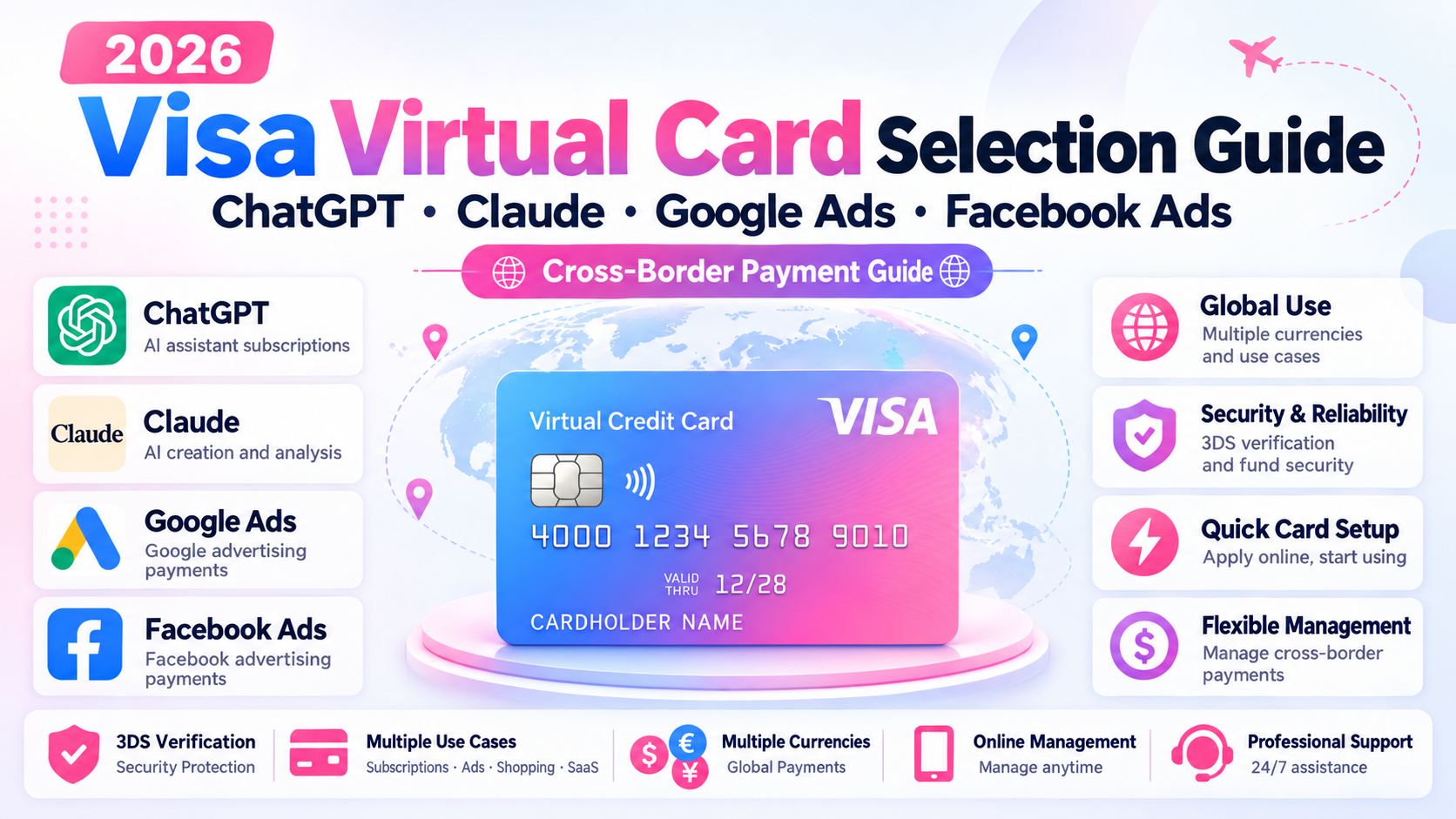
Possible merchants discussed in this context include ChatGPT, Claude, Google AI services, Midjourney, Google Ads, Facebook Ads, and TikTok Ads. This list describes intended uses; it does not confirm compatibility with every account or card.
Businesses interested in API integration should ask for current documentation and a written description of the available features, limits, and responsibilities.
Before Using a Card
- Provide accurate identity and billing information
- Follow the provider's and merchant's rules
- Check the available balance, limits, fees, and authorization holds
- Protect card details and enable account security features
- Investigate a declined payment before repeated retries
- Keep clear records for separate projects and subscriptions
Choose a card by matching your eligibility, merchant requirements, costs, and management needs. Online issuance can be convenient, while successful payment still depends on the full transaction conditions.
本文由 VCCMap 虚拟卡指南整理,转载请注明出处:https://vccmap.com/en/2026-visa-%e8%99%9a%e6%8b%9f%e4%bf%a1%e7%94%a8%e5%8d%a1%e9%80%89%e6%8b%a9%e6%8c%87%e5%8d%97%ef%bc%9achatgpt%e3%80%81claude%e3%80%81google-ads%e3%80%81facebook-ads-%e8%b7%a8%e5%a2%83%e6%94%af-3/