Virtual card services change their products, supported countries, fees, and eligibility rules. A provider comparison is useful only when it separates current information published by the provider from opinions, historical ratings, and claims that still need to be checked for your account.
Editorial alignment: November 26, 2026. The OneKey service notice and Airwallex supported-programs page were rechecked on this date; the guide also retains earlier product notes where current terms could not be established. Airwallex’s programs page applies to API version 2024-03-31 and later. No account opening, funding, payment, refund, or API integration test was performed. This guide provides no star ranking or measured acceptance rate. Confirm the exact product, issuer, region, currency, merchant, account, and applicable terms before applying or funding.
Quick comparison: what official sources confirm
| Provider or service | What its official information says | What to verify before you rely on it |
|---|---|---|
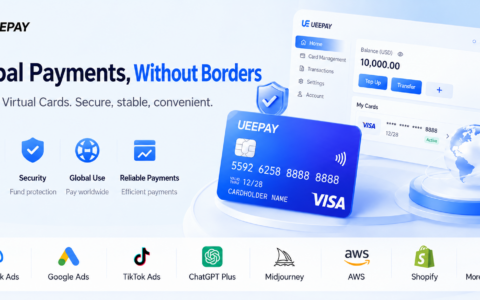
| UeePay | VCCMap lists a referral-channel creation charge of USD 1 and 1% funding. These figures are a channel listing, not an independently verified fee schedule for every account. The public site did not expose complete readable terms in this review. | Ask whether the particular card range supports your merchant, country, and account. Confirm current fees, limits, funding and refund rules in the order or account interface. |
| Airwallex | Its issuing API documentation describes organization-linked virtual cards and controls such as merchant category, currency, and transaction amount. | Confirm that your business, region, account, and product are eligible for issuing. API features require the appropriate account access and do not guarantee that a merchant will accept a card. |
| OneKey Card | The current OneKey Help Center announcement states that the Card service was discontinued in September 2024. | Do not treat it as an option for a new card application. Existing users should follow OneKey’s official support instructions for historical balances or refunds. |
| WildCard | This review did not establish current official confirmation of new card issuance or remaining-balance arrangements. | Check the current official service status and support route before applying or funding. Historical package prices do not establish current availability. |
| DuPay | Current new-card eligibility and a complete applicable fee schedule were not independently confirmed. | Establish the exact provider, residence eligibility, card product, refund rules, and balance-withdrawal arrangements before depositing. |
| Other services | Product names and availability can change, and similarly named services may be operated by different entities. | Verify the exact official domain, legal entity, service status, eligible countries, and current product terms. Do not rely on a copied comparison table as proof of availability. |
Sources: UeePay official website, Airwallex Issuing Cards API documentation, supported card programs, and OneKey Card service sunsetting announcement.
How to compare virtual card providers
1. Check eligibility and the issuing entity
Start with the country where you live or operate, the type of account you need, and the identity or business documents you can provide. Confirm which legal entity offers the card and which institution issues it. A brand may offer different products in different regions, and an advertised feature may not be available to every account.
2. Compare total cost, not one headline fee
Ask for current details on card issuance, funding, FX conversion, transaction, refund, withdrawal, monthly, and inactivity fees. Check whether fees differ by card range, account tier, funding method, or currency. Estimate the total using your actual monthly payment count and amounts. If pricing is shown only after login or quoting, record the date and conditions of the quote.
Use our virtual card fee checklist to compare the cost items consistently.
3. Verify merchant compatibility separately
Visa or Mastercard branding alone does not guarantee acceptance by an advertising platform, subscription service, travel merchant, or online store. Ask the provider about the specific card product, issuing country, billing currency, and permitted merchant category. Where possible, test with a low-value legitimate transaction before moving recurring or business payments.
For ad billing, check each platform’s own payment settings and recovery guidance. Our guides cover choosing a card for Google Ads and Meta Ads, Meta Ads payment failures, and Google Ads payment failures.
4. Review spending controls and records
For team or advertising spend, compare per-card and per-transaction limits, freeze and replacement options, team permissions, real-time notifications, and transaction exports. If you need an API, read its official documentation and ask whether issuing is enabled for your account; do not infer API access from a marketing page.
5. Understand support, disputes, and refunds
Before funding a card, find the provider’s support channel and written procedures for failed authorizations, merchant refunds, disputed transactions, account closure, and remaining balances. Check how long each process may take and which documents are required. Keep copies of current terms and transaction records.
A practical comparison worksheet
- Is the service active, and is the exact card product open to new applications in your location?
- Which legal entity and issuing institution provide the card?
- Which identity or business checks apply to your account?
- What is the full cost for your expected funding method, currency, and spending pattern?
- Does the provider permit your intended merchants and transaction types?
- What spending controls, team permissions, alerts, exports, or API functions are actually enabled?
- How are failed charges, refunds, disputes, account closure, and remaining funds handled?
- Can you reach support and obtain written terms before depositing funds?
Frequently asked questions
Which virtual card provider is best?
There is no single best provider for every user. Compare eligibility, the exact card product, full fees, merchant compatibility, controls, support, and refund terms against your intended use. Treat old star ratings or unsupported acceptance claims as opinions, not measured results.
Does a virtual card guarantee payment acceptance?
No. The merchant and card issuer can apply their own eligibility and authorization rules. A provider’s examples of supported use cases are not a guarantee that a particular card will work for every account or transaction.
Can I rely on a comparison that lists exact fees?
Only after checking the provider’s current pricing for your country, account, card range, and funding method. Keep the quote date because fees and terms may change.
Summary
Choose a virtual card by verifying the service, eligibility, total cost, intended merchant support, spending controls, and support terms. Provider status and pricing can change, so check primary sources and account-specific terms before applying or adding funds.
This guide is general information, not financial advice or an endorsement. Confirm the provider’s current terms and the rules applicable in your location before using a payment service.
Prepared by VCCMap. Please credit the source when republishing:https://vccmap.com/en/%e3%80%8a2026-%e8%99%9a%e6%8b%9f%e5%8d%a1%e5%b9%b3%e5%8f%b0%e6%a8%aa%e8%af%84%ef%bc%9aueepay%e3%80%81wildcard%e3%80%81onekey%e3%80%81airwallex-%e8%b0%81%e6%9b%b4%e5%80%bc%e5%be%97%e9%80%89%ef%bc%9f-en/